Layer
(LAY-ur)
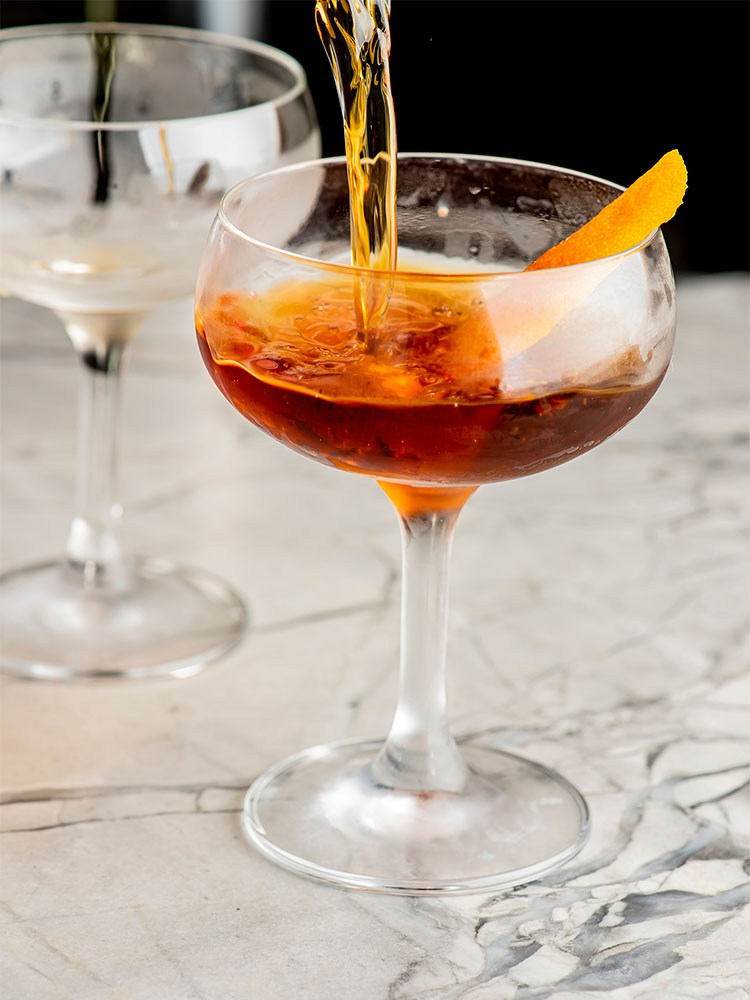
Layering refers to the technique of creating distinct and visually appealing layers of different colored or flavored liquids within a single cocktail. This is often done to enhance the presentation and aesthetics of the drink. Layering is achieved by carefully pouring each ingredient over the back of a bar spoon or by using a specialized layering tool to slow down the liquid’s descent, allowing it to float on top of the previous layer.
Here are some key points about layering cocktails:
Density Matters: Layering is most successful when the liquids used have different densities. The heavier ingredient will naturally sink to the bottom, while the lighter one will stay on top. Common ingredients for layering include various liqueurs and spirits with different sugar content.
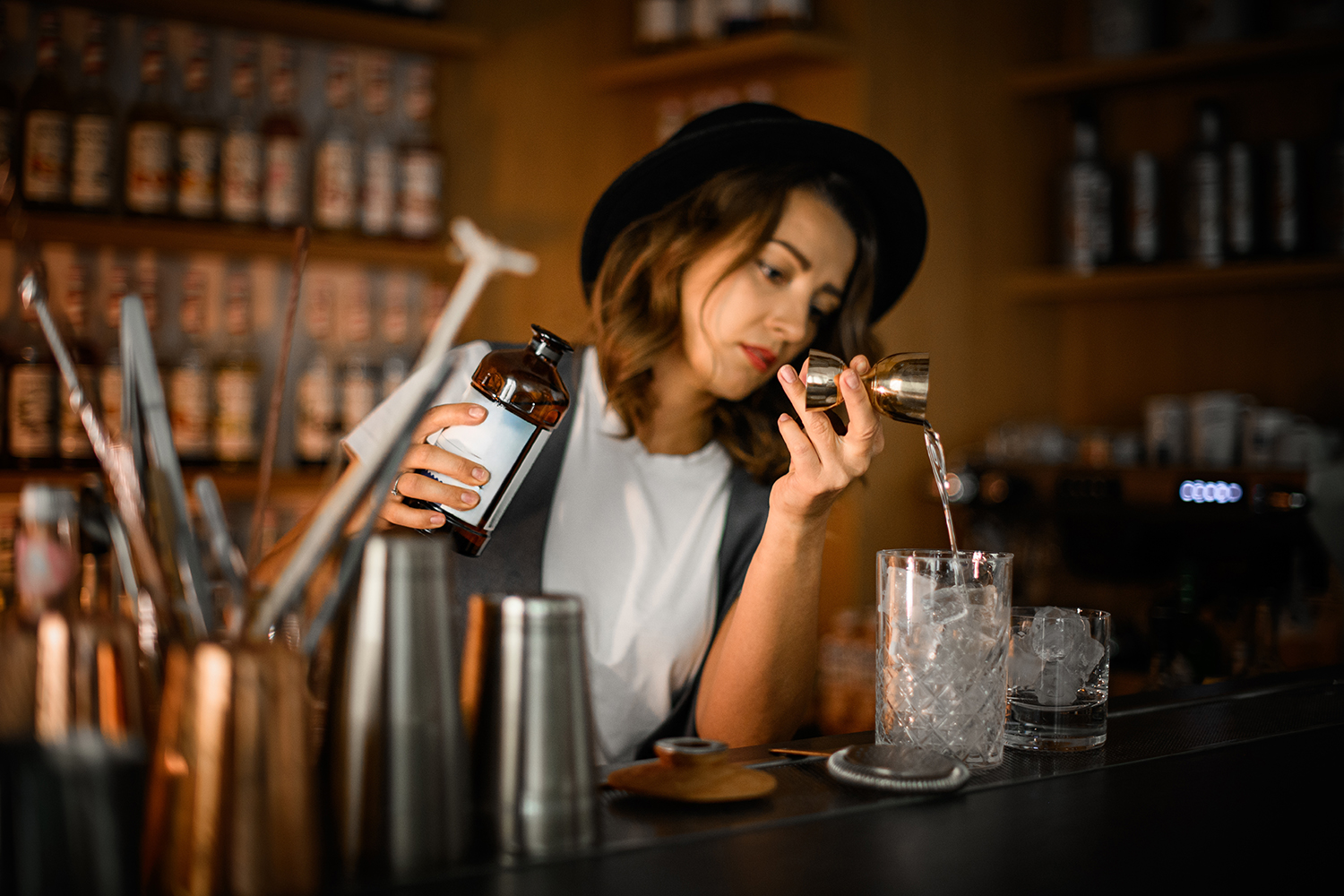
Pouring Technique: The key to layering is a slow and steady pour. Bartenders often use the back of a bar spoon or a specialized layering tool to gently pour the liquid onto the surface of the drink without disturbing the layer below.
Optimal Order: Some liquids naturally have a higher density than others. For example, sweet liqueurs tend to be heavier than spirits. Therefore, the order in which you pour the ingredients is crucial for successful layering.
Careful Measurements: Precision in measuring each ingredient is important to achieve well-defined layers. Too much force or inconsistency in pouring can cause the layers to mix.
Common layered cocktails include the B-52, which typically consists of coffee liqueur, Irish cream, and orange liqueur, creating distinct layers of brown, white, and orange.


Recently Added Cocktails